
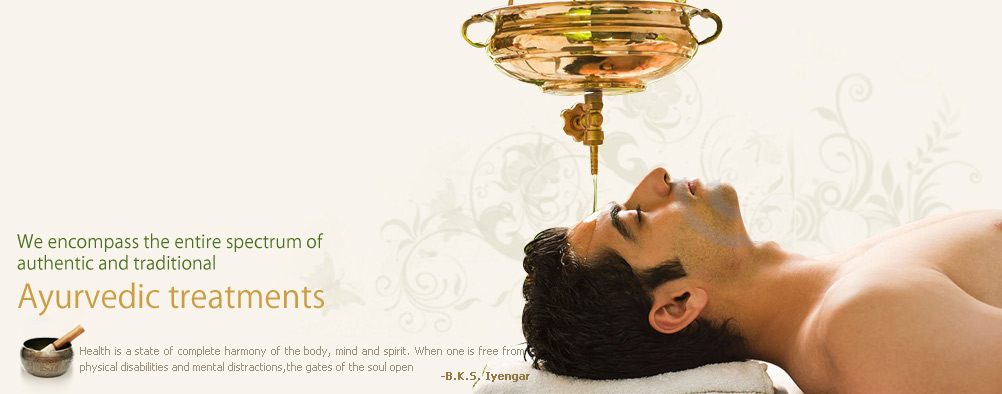



Ayurveda is an intricate system of healing that originated in India thousands of years ago. We can find historical evidence of Ayurveda in the ancient books of wisdom known as the Vedas. In the Rig Veda, over 60 preparations were mentioned that could be used to assist an individual in overcoming various ailments. The Rig Veda was written over 6,000 years ago, but really Ayurveda has been around even longer than that. What we see is that Ayurveda is more than just a medical system. It is a Science of Life. We are all part and parcel of nature. Just as the animals and plants live in harmony with nature and utilize the Laws of Nature to create health and balance within their beings, we, too, adhere to these very same principles. Therefore, it is fair to say that Ayurveda is a system that helps maintain health in a person by using the inherent principles of nature to bring the individual backs into equilibrium with their true self. In essence Ayurveda has been in existence since the beginning of time because we have always been governed by nature's laws.
Ayurveda is made up of two Sanskrit words: Ayu which means life and Veda which means the knowledge of. To know about life is Ayurveda. However, to fully comprehend the vast s cope of Ayurveda let us first define "Ayu" or life. According to the ancient Ayurvedic scholar Charaka, "ayu" is comprised of four essential parts. The combination of mind, body, senses and the soul.
Experts view the recommendations suggested for maintenance of positive health as protective measures against endogenous - eg. ageing - and exogenous - eg. environmental pollution - afflictions and point out their efficacy in strengthening the cellular function in human body. These observations are comparable with modern concept of Prohost Therapy and use of Cyto-protective Agents of contemporary medicine.
Obviously regular or periodic use of rejuvenative therapy (rasayanachikitsa) also finds a place in the maintenance of positive health because of its therapeutic potentials to delay the process of ageing and also to improve quality of life.
In a nutshell, Ayurveda recommends socio-economic adjustments, modification of personal habits, protection against trauma, control of infection, control of pollution, and prophylatic medication for the maintenance of positive health. Ayurveda and Veda have a relation in depth. Vedas are ancient doctrines of great knowledge on earth. The major Vedas are four in number and they are Rigveda, Yajurveda, Sama veda and Atharvana veda. Each main veda has one upa veda [sub veda]. Ayurveda is treated as Upaveda of Rigveda and Antharveda (internal part) of Atharvana veda. Ayurveda is not a merely medical system or a medical kit; it is like sacred science of life. It helps the human being to lead a happy life with pure mind by providing the whole information about it. So it is treated as Panchamaveda (5th major veda).In Ayurveda there are some “paramparas” [Knowledge from Gods] called Daiva parampara, Siddha parampara and Rishi parampara:



Subhananda Gurudev founded an Organization, the Atma Bodhodaya Sangham (Reg.No.144 /1107), with
its head quarters at Cherukole, Mavelikara, supporting the belief of ‘One Caste,One Religion and One God for
the Mankind’.